Fixing Dental Work Abroad: Turkey Teeth Aftercare in the UK
Had dental work abroad and need help at home? A practical UK guide to aftercare and repairs: when to seek urgent help, what a UK dentist can do, what it costs, and how to find a verified dentist to put things right.
Having dental work done abroad and then needing help once you are home is more common than most people realise. Maybe a crown has come loose, a tooth has started to ache, or you simply want a UK dentist to check that everything is as it should be. Whatever the reason, this guide explains exactly how to get aftercare in the UK after treatment abroad: when to treat it as urgent, what a UK dentist can and cannot do, what it is likely to cost, and how to find a dentist you can trust to put things right.
At Rated Clinics we hear from a lot of people in this position, and the first thing we want to say is simple: you are not in trouble and you have options. UK dentists treat patients returning from abroad every week. The sooner you get seen, the more straightforward and affordable the fix usually is.
First, is it an emergency?
Some situations need attention quickly. Treat it as urgent and seek a same-day or emergency appointment if you have:
- Facial swelling, especially around the eye or under the jaw.
- Severe, throbbing pain that painkillers barely touch.
- A bad taste, discharge or a spot on the gum, which can signal infection.
- A crown or bridge that has come off and left a sharp or painful tooth.
Infections do not resolve on their own and can spread, so do not wait them out. If you cannot get seen quickly, NHS 111 can direct you to urgent dental care. For the bigger picture on serious problems, see our guide to what to do when dental work abroad goes wrong.
Can a UK dentist fix work done abroad?
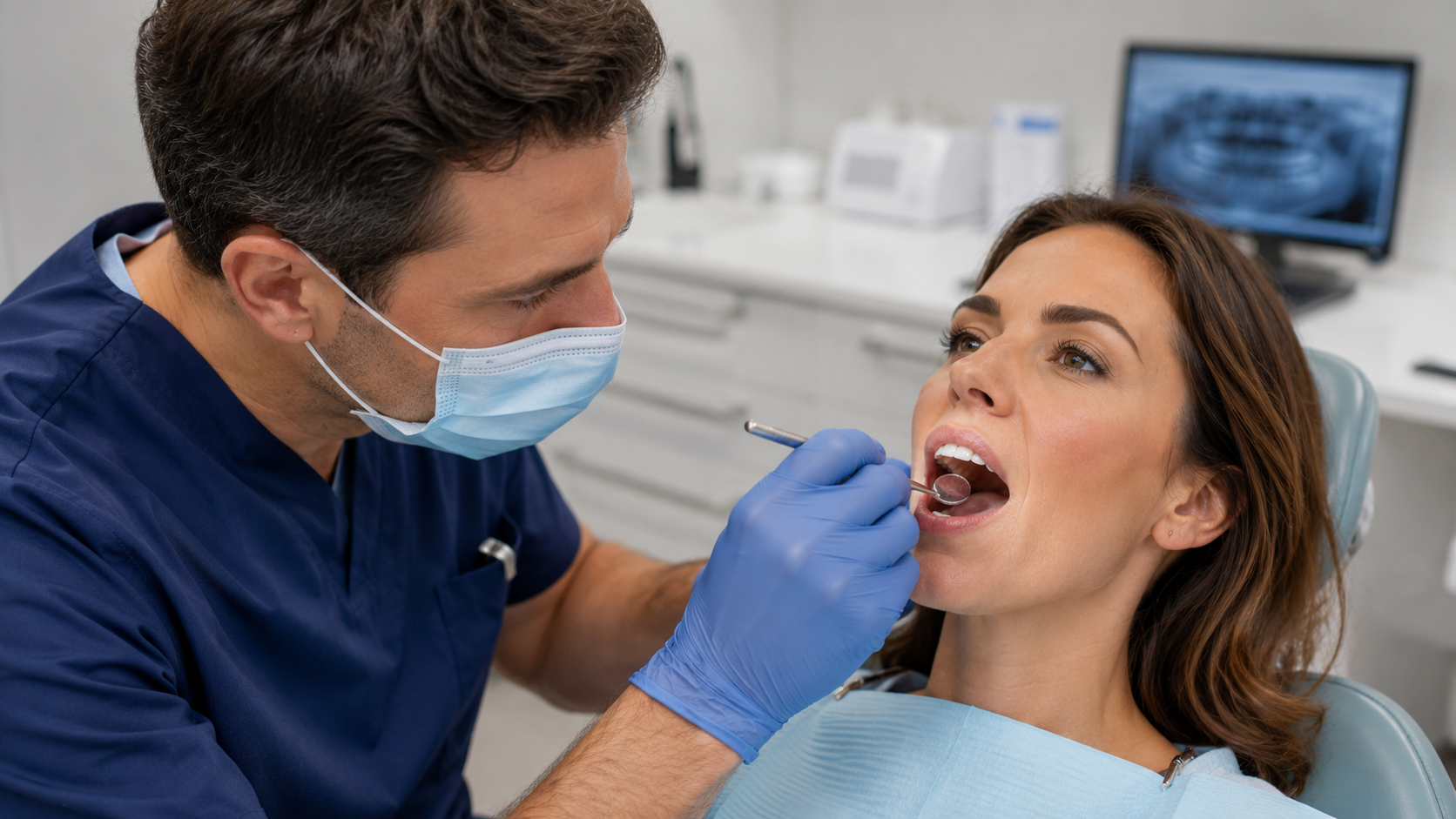
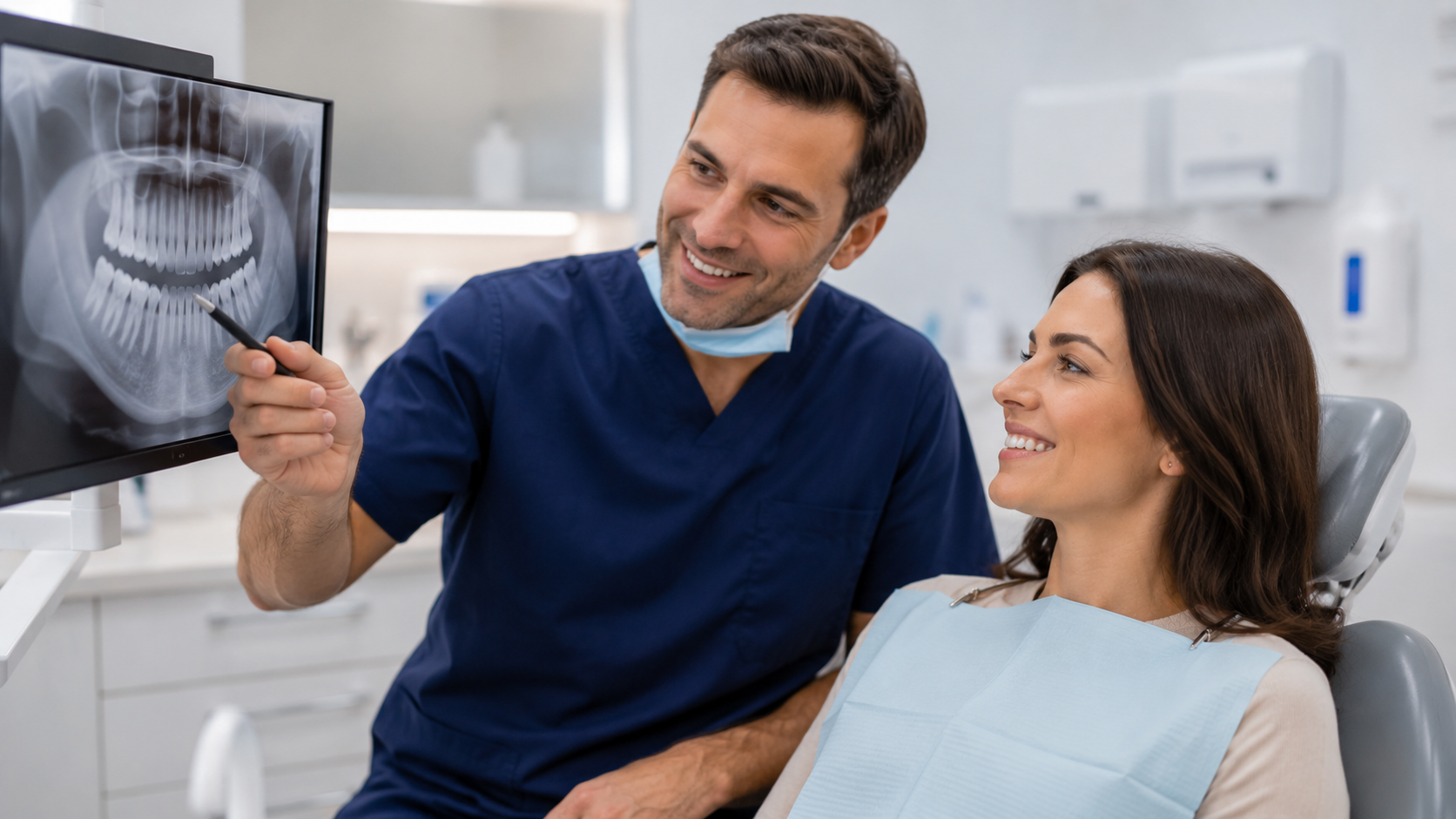
Yes. A UK dentist can assess, maintain and repair dental work no matter where it was done. What they will not usually do is rush in and rip everything out. A good dentist starts with a proper assessment: an examination, X-rays, and a conversation about what was done and what is bothering you.
From there they can take a measured approach, saving what is sound and replacing only what needs replacing. Common aftercare and repair work includes:
- Treating infection and, where needed, root canal treatment to save a tooth.
- Re-cementing or replacing crowns and bridges that have failed.
- Adjusting a bite that does not meet correctly.
- Treating gum inflammation around new crowns or implants.
- Replacing failed implants or crowns, sometimes in stages.
If you originally had a full set of crowns, our guide to turkey teeth complications explains what tends to go wrong and why, which can help you understand your dentist's plan.
What it is likely to cost
This is the question everyone asks, and the honest answer is that it depends entirely on the damage. A single re-cemented crown is a modest cost. Replacing a full arch of crowns, treating several infections and redoing failed implants is a major undertaking that can run to thousands of pounds. UK dentists frequently report that corrective work costs patients several hundred to several thousand pounds, and in the most serious cases more than the original treatment abroad.
The key is to get a clear, written plan and quote before any major work begins, ideally with the work staged so you can spread the cost. For realistic figures and how the maths compares, see our turkey teeth cost comparison and our overview of dental tourism in the UK.
What to bring to your UK appointment
You will get more out of your first visit if you can bring:
- Any treatment notes, receipts or paperwork from the clinic abroad.
- Any X-rays or scans they gave you.
- A note of what was done, when, and what materials were used if you know.
- A clear description of your symptoms and when they started.
Do not worry if you have none of this. A UK dentist can still assess everything with their own examination and X-rays.
How to choose a dentist for your aftercare
After one disappointing experience, the last thing you want is another. Choose a dentist whose credentials and reputation you can actually verify. Look for:
- GDC registration. Every UK dentist must be registered with the General Dental Council. A trustworthy practice is happy to confirm this.
- Experience with corrective work. Many practices now regularly treat patients returning from abroad.
- Honest reviews. Look for real, detailed patient reviews rather than a wall of five-star ratings with no detail.
This is exactly where Rated Clinics helps. Every clinic is scored on a transparent 0 to 100 Trust Score, and a green verified badge means we have manually checked the dentist's GDC registration and indemnity insurance ourselves. You can browse verified dental clinics near you and read moderated reviews from real patients before you book.
Frequently asked questions
Can a UK dentist fix turkey teeth?
Yes. A UK dentist can assess and repair crowns, veneers and implants fitted abroad. They will usually take a careful approach, treating infection, saving sound teeth and replacing only what has failed, rather than removing everything at once.
How much does it cost to fix dental work from abroad in the UK?
It varies with the damage. Minor repairs are modest, but replacing a full set of crowns and treating infections can run into several thousand pounds. Always get a written plan and quote first, and ask whether the work can be staged to spread the cost.
Will an NHS dentist help if my work was done abroad?
An NHS dentist can provide urgent and necessary care if you can access one, though availability of NHS appointments is limited in many areas. For complex cosmetic repairs you may need private treatment. If you have swelling or severe pain, seek urgent care or call NHS 111.
I am not in pain but worried, should I still see a dentist?
Yes, a check-up is sensible. A dentist can take X-rays to spot problems brewing beneath crowns or around implants before they become painful or expensive, and reassure you if all is well.
Get your smile back on track
If something does not feel right after treatment abroad, the worst thing you can do is ignore it and hope. The best thing you can do is get seen by a verified UK dentist who will give you a straight assessment and a clear plan.
Browse verified dental clinics on Rated Clinics, look for the green badge and the Trust Score, and read what real patients say before you book. If you are a UK dentist who helps patients repair work done abroad, you can list your clinic for free.