Botox UK: Cost, How Long It Lasts and How to Stay Safe (2026 Guide)
A complete, up-to-date UK guide to Botox: what it is, how long it lasts, what it should cost in 2026, whether it is safe, and the new rules changing who can legally inject you. Plus how to choose a verified, trustworthy clinic.
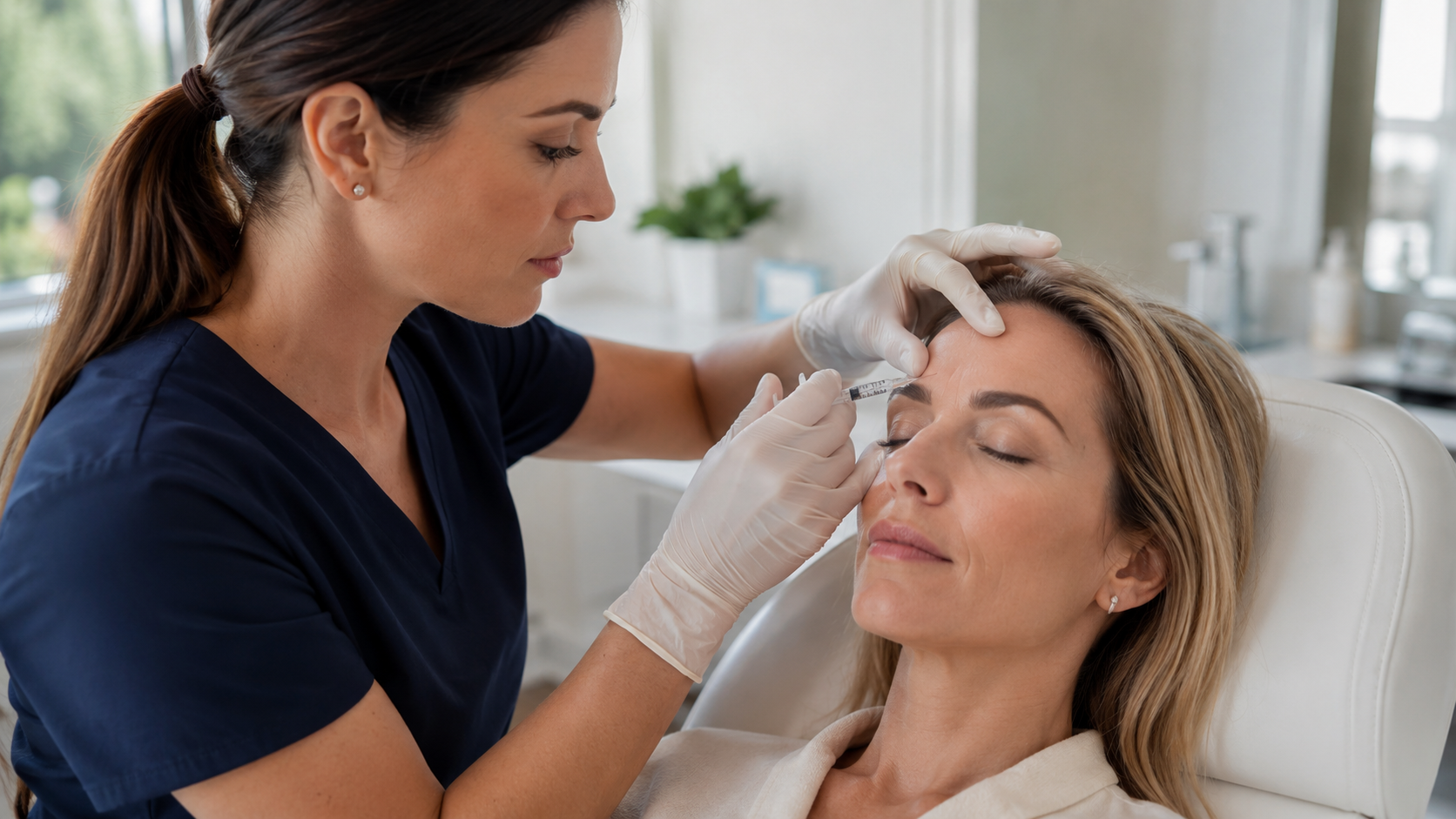
Botox is the most popular non-surgical cosmetic treatment in the UK, and one of the most misunderstood. Search for it and you will find clinics quoting wildly different prices, beauty salons offering it next to a spray tan, and headlines about treatments gone wrong. This guide cuts through all of that. We will explain what Botox actually is, how long it lasts, what it should cost in 2026, whether it is safe, and the new rules that are changing who is legally allowed to inject you.
At Rated Clinics we score every clinic on a transparent 0 to 100 Trust Score and only award a verified badge after we have manually checked a practitioner's regulatory registration and insurance. So while this is a complete guide to Botox, it is also a guide to choosing an injector you can actually trust. That distinction matters more now than it ever has.
What Botox actually is
Botox is a brand name. The treatment itself uses botulinum toxin type A, a purified protein that temporarily relaxes the muscles it is injected into. When a muscle cannot fully contract, the skin above it creases less, which softens lines such as frown lines, forehead lines and crow's feet. Other brands licensed in the UK include Azzalure, Bocouture and Dysport, but most people use "Botox" as a catch-all term.
The single most important fact about Botox is this: it is a prescription-only medicine. In the UK that means it can only be prescribed by a doctor, dentist, nurse prescriber or pharmacist prescriber after a proper consultation. It is not a beauty product, and a non-prescriber injecting it without genuine clinical oversight is operating outside the rules. Keep that in mind every time you see a suspiciously cheap offer.
What Botox is used for
Most Botox in the UK is cosmetic, used to soften the lines that come with everyday facial movement. The most commonly treated areas are:
- Forehead lines - the horizontal lines that appear when you raise your eyebrows.
- Frown lines - the vertical "11" lines between the brows, sometimes called glabellar lines.
- Crow's feet - the lines that fan out from the corners of the eyes when you smile.
Beyond cosmetics, botulinum toxin is also used medically on the NHS and privately for conditions such as chronic migraine, excessive sweating (hyperhidrosis), teeth grinding and an overactive bladder. If you are exploring the medical side, our guide to Botox for migraines in the UK goes into more detail.
How long does Botox last?
For most people, Botox lasts three to four months. Some see results hold for up to six months, particularly after several rounds of treatment, while a small number find it wears off closer to the ten or twelve week mark. There is no single number that fits everyone, because how long it lasts depends on a handful of personal factors.
What affects how long it lasts
- Your metabolism. A faster metabolism tends to break the product down sooner, which is one reason very active people sometimes find Botox fades quicker.
- The area treated. Strong, frequently used muscles such as those around the mouth or the frown often metabolise the product faster than the forehead.
- The dose. An under-dosed treatment may look like it "did not work" when in reality it simply did not last. A properly assessed dose is part of what you pay an experienced injector for.
- How regularly you have it. People who top up consistently often find the muscles weaken over time, so results gradually last a little longer.
A good injector will not promise a fixed duration. They will assess your muscle strength, agree a sensible dose and invite you back for a two-week review to check the result and adjust if needed. That review appointment is a quiet sign of a clinic that takes its work seriously.
How much does Botox cost in the UK in 2026?
As a rough guide, expect to pay £150 to £350 per area in 2026, with most single-area treatments sitting around the £150 to £250 mark. Some clinics price per unit instead, typically £8 to £15 per unit, with a treatment area using anywhere from 10 to 50 units depending on the muscle. Three-area packages (forehead, frown and crow's feet together) commonly land between £300 and £500.
Price also varies by where you are:
- London and the South East - generally the most expensive, often £200 to £350+ per area, more again on Harley Street.
- Manchester, Birmingham and other major cities - typically £150 to £280 per area.
- Scotland, Wales and smaller towns - often the most affordable, from around £120 to £250 per area.
You can compare verified clinics in your area on Rated Clinics, including Botox clinics in London and Botox clinics in Manchester, or simply find Botox clinics near you.
Why cheap Botox is a red flag
If you see Botox advertised below roughly £100 per area, treat it as a warning rather than a bargain. Genuine, licensed botulinum toxin has a real cost, and so does the time of a qualified prescriber. Prices that look too good to be true usually mean one or more corners are being cut: an unlicensed product, a practitioner with no medical qualification or prescribing authority, minimal training, or no plan in place if something goes wrong. With Botox, the cheapest option is rarely the safest, and as the next section shows, the consequences of getting this wrong have become very real.
Is Botox safe?
When it is carried out by a qualified, regulated practitioner using a licensed product, Botox has a strong safety record. The active ingredient is approved by the UK's medicines regulator, the Medicines and Healthcare products Regulatory Agency (MHRA), and millions of treatments are given each year without serious problems. Most side effects are mild and short-lived.
Common, temporary side effects include:
- Redness, swelling or small bruises at the injection sites.
- A mild headache in the first day or two.
- A heavy or "tight" feeling as the product settles.
Less common effects, often linked to poor technique or the wrong dose, include a drooping eyelid or brow, an uneven result or a "frozen" look. These usually settle as the product wears off, but they can be distressing and, with eyelid droop, occasionally need treatment of their own. This is exactly why injector skill matters as much as the product in the syringe.
The 2025 botulism outbreak: a warning the whole industry noticed
The risks of unregulated injecting stopped being theoretical in the summer of 2025. Between early June and early August 2025, the UK Health Security Agency (UKHSA) confirmed more than 40 cases of iatrogenic botulism - a rare, potentially life-threatening paralysis - across several regions of England, all linked to cosmetic injections of botulinum toxin products. Many of those affected had been treated in informal settings by untrained people using illegally obtained, unlicensed products.
In response, the MHRA launched a crackdown on the illegal supply of "Botox", warning that anyone selling or supplying unlicensed botulinum toxin can face up to two years in prison and an unlimited fine under the Human Medicines Regulations 2012. You can read the official warnings from UKHSA and the MHRA. The lesson is blunt: Botox is safe, but only in the right hands. The single biggest thing you can do to protect yourself is to choose a properly qualified, verifiable injector.
The law is changing: new UK regulation explained
The cosmetic injectables industry in the UK has long been described as a postcode lottery, with strong clinics sitting alongside almost completely unregulated operators. That is now changing.
There are already two firm legal lines. First, under the Botulinum Toxin and Cosmetic Fillers (Children) Act, it is illegal to give Botox or fillers for cosmetic reasons to anyone under 18 in England, even with parental consent. Second, as noted above, supplying unlicensed product is a criminal offence.
On top of this, in August 2025 the government published its response to a consultation on licensing non-surgical cosmetic procedures in England. The proposed scheme would sort procedures into red, amber and green categories based on risk. Lower-risk "green" treatments could be carried out by any licensed practitioner who meets agreed standards, while medium-risk "amber" treatments (the category Botox is expected to fall into) would require non-healthcare practitioners to work under the named oversight of a regulated healthcare professional. Local authorities would run the licensing system, and there is a clear intention to tighten the rules around treating under-18s further. You can read the government's consultation response on GOV.UK.
The direction of travel is obvious: more accountability, clearer standards and a paper trail behind every reputable injector. At Rated Clinics we think that is overdue, and our verification process is built around exactly the signals this new framework will reward.
How to choose a safe Botox clinic
This is the part that protects you. A good injector is not the cheapest or the one with the best Instagram grid. They are the one who can prove their credentials and stand behind their work. Here is how to check.
1. Confirm the prescriber and their registration
Botox must be prescribed by a registered healthcare professional. Ask who is prescribing yours and check their registration on the relevant public register: the General Medical Council (GMC) for doctors, the General Dental Council (GDC) for dentists, the Nursing and Midwifery Council (NMC) for nurses, or the General Pharmaceutical Council (GPhC) for pharmacists. A trustworthy clinic will tell you this without hesitation. Our guide on how to find a safe injector in the UK walks through this step by step.
2. Insist on a face-to-face consultation
A remote prescription with no genuine assessment is a red flag. Good practice, now reinforced by tighter prescribing rules, is an in-person consultation where the prescriber assesses you, discusses your medical history and agrees the plan before anything is injected.
3. Look for independent verification
Two well-known registers can help: the Joint Council for Cosmetic Practitioners (JCCP) and Save Face, an accredited register of qualified practitioners. We explain both in our guides to the JCCP register and the Save Face register. On Rated Clinics, a green verified badge means we have manually checked a clinic's regulatory registration and indemnity insurance ourselves, rather than taking their word for it.
4. Read honest reviews, not marketing
Reviews are only useful if they are real. We publish moderated reviews from signed-in patients, with no scraping and no anonymous noise, and every clinic has a public right of reply. If you want to dig into our approach, our verification methodology sets out exactly how the Trust Score is built.
When you are ready, you can browse our directory of verified Botox clinics or read our editorial pick of the best Botox clinics in the UK.
Botox vs fillers: a quick word
People often lump Botox and dermal fillers together, but they do very different jobs. Botox relaxes muscles to soften movement lines. Fillers add volume, plumping areas such as the lips, cheeks and under-eyes. Many people have both, but they are not interchangeable. If you are weighing up which is right for you, see our dedicated comparison of Botox vs fillers, along with our guides to lip fillers in the UK and dermal fillers in the UK.
What to expect on the day, and afterwards
A Botox appointment is quick, usually 15 to 30 minutes. After a consultation and a few photos, the injector marks the points, cleans the skin and gives a series of small injections with a fine needle. Most people describe it as a brief sharp scratch rather than painful. There is little to no downtime, and you can normally return to work the same day.
For the first 24 hours, the standard advice is to stay upright for a few hours, avoid rubbing or massaging the treated area, skip strenuous exercise, and avoid saunas, sunbeds and heavy alcohol. The result is not instant. You will usually notice changes from day three, with the full effect at around two weeks, which is why that two-week review appointment is so useful.
Frequently asked questions
How long does Botox last?
Botox typically lasts three to four months, occasionally up to six. How long it holds depends on your metabolism, the area treated, the dose used and how regularly you have treatment. Results often last a little longer once you have had several rounds.
Is Botox safe?
Yes, when it is carried out by a qualified, regulated practitioner using a licensed product. The active ingredient is MHRA-approved and serious problems are rare in proper clinical settings. The danger comes from unlicensed products and untrained injectors, which were linked to a botulism outbreak in England in 2025. Choosing a verified clinic is the best way to stay safe.
How much does Botox cost in the UK?
Expect around £150 to £350 per area in 2026, or £8 to £15 per unit. London is generally dearest and smaller towns cheaper. Be wary of anything under about £100 per area, as it often signals an unlicensed product or an unqualified injector.
Does Botox help crow's feet?
Yes. Crow's feet, the lines that fan out from the corners of the eyes, are one of the most commonly treated areas. Botox relaxes the muscle responsible so the lines soften when you smile. It is often treated alongside the forehead and frown lines as part of a three-area package.
How many units of Botox do I need for my forehead?
It varies with muscle strength and the look you want, but the forehead often uses somewhere in the region of 10 to 30 units, frequently treated together with the frown lines for a balanced result. A proper consultation is the only way to know your dose, which is another reason to avoid one-size-fits-all offers.
Can anyone inject Botox?
No. Botox is a prescription-only medicine that must be prescribed by a registered doctor, dentist, nurse or pharmacist prescriber, and giving it for cosmetic reasons to under-18s in England is illegal. New licensing rules being introduced in England will tighten standards further around who can administer it and under what oversight.
Find a verified Botox clinic
Botox is safe, effective and well understood when it is done properly. The risk lies almost entirely in who holds the needle. That is the whole reason Rated Clinics exists: to put verified practitioners and honest patient reviews in one place, scored on the same transparent formula, so you are not gambling with your face.
Start by browsing verified Botox clinics near you, check the green badge and the Trust Score, and read what real patients have said before you book. If you run a clinic and want to be listed and verified, you can list your clinic for free.